
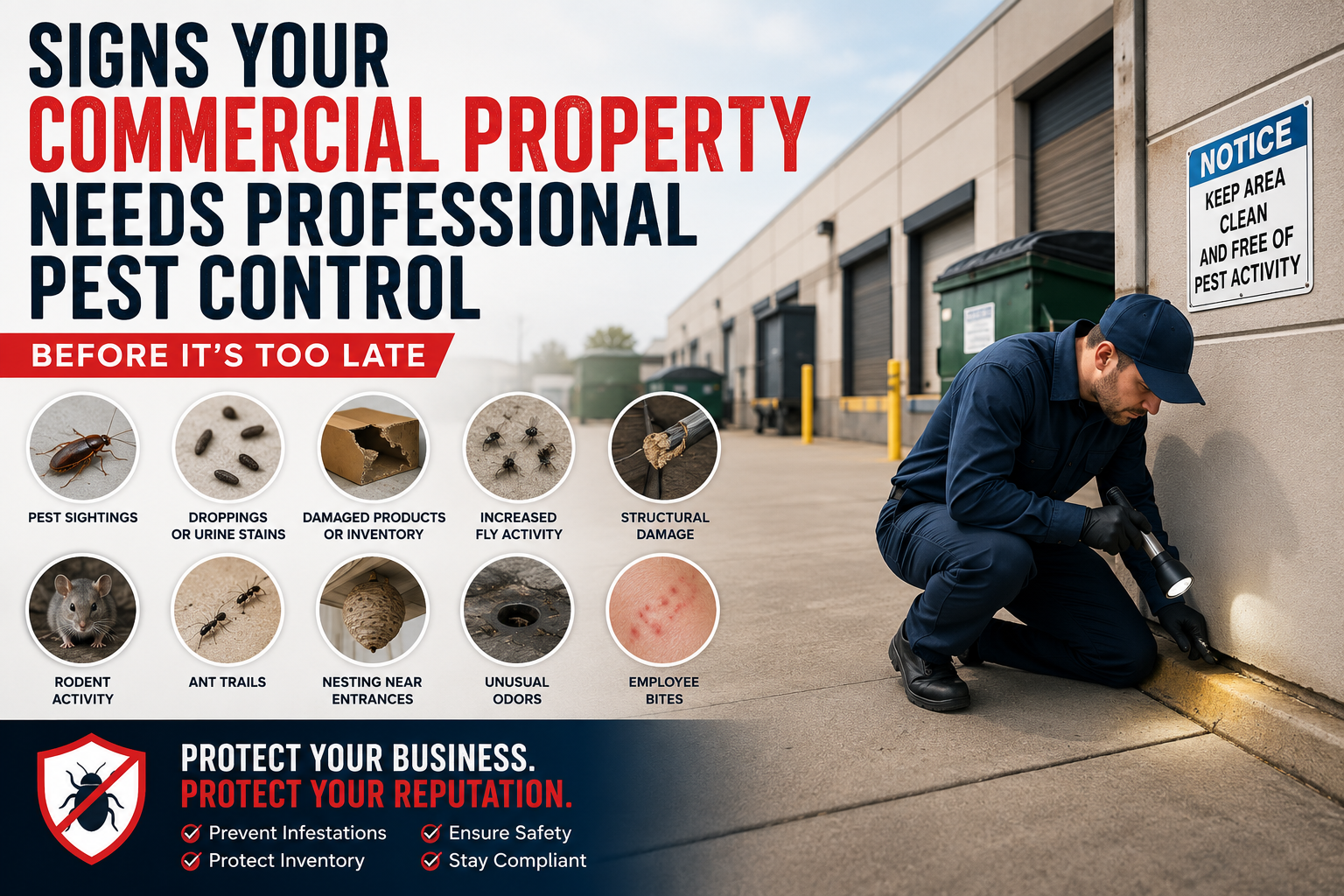
Signs Your Commercial Property Needs Professional Pest Control Before It’s Too Late
Whether you operate a restaurant, warehouse, office building, healthcare facility, retail store, apartment complex, or manufacturing plant, pest problems can quickly become a serious threat to your business. Unfortunately, many infestations begin quietly, with only subtle warning signs before growing into costly disruptions.
Ignoring these early indicators can lead to property damage, health concerns, inventory loss, failed inspections, and damage to your company’s reputation. The good news is that recognizing the warning signs early and partnering with a professional commercial pest control company can prevent small issues from becoming major problems.
At DHS Pest Control, we help businesses throughout Northeast Ohio protect their properties with customized commercial pest management programs designed to stop infestations before they impact daily operations.
Why Early Pest Detection Matters
Commercial properties provide ideal environments for many types of pests. Constant foot traffic, food sources, storage areas, moisture, and warm indoor temperatures create conditions where insects and rodents can thrive year-round.
Unlike residential infestations, commercial pest problems can affect:
- Employees
- Customers
- Vendors
- Tenants
- Inventory
- Equipment
- Business operations
- Regulatory compliance
The longer an infestation goes unnoticed, the more expensive it becomes to eliminate. Early detection allows professional technicians to identify the source of the problem and implement targeted treatments before pests spread throughout the building.
1. Employees or Customers Are Seeing Pests
One of the clearest warning signs is when employees or customers begin reporting pest sightings.
Common complaints include:
- Cockroaches running across floors
- Mice in storage rooms
- Ant trails in break rooms
- Flies around entrances
- Spiders throughout offices
- Wasps nesting near doorways
- Bed bugs in hotels or apartment units
Even one confirmed sighting may indicate a much larger hidden infestation.
Many pests are nocturnal and spend most of their time hidden inside walls, ceilings, crawl spaces, or equipment. If they’re becoming visible during business hours, the population may already be significant.
2. Droppings or Urine Stains
Rodents leave behind clear evidence of their presence.
Signs include:
- Small black droppings
- Grease marks along walls
- Urine odors
- Nesting materials
- Gnawed packaging
- Chewed wiring
Rodents reproduce quickly, making immediate action essential.
Beyond property damage, rodent contamination can create serious health concerns for employees and customers.
3. Unusual Odors Throughout the Building
Persistent odors often indicate hidden pest activity.
Examples include:
- Musty smells
- Strong ammonia odors
- Dead animal odors
- Oily or musky smells from cockroaches
Many business owners assume unpleasant smells are related to plumbing or HVAC systems when pests may actually be responsible.
Professional inspections can identify the source before odors worsen.
4. Damaged Products or Inventory
Businesses that store products are especially vulnerable.
Rodents, insects, and stored product pests commonly damage:
- Cardboard boxes
- Packaging
- Food products
- Paper goods
- Fabrics
- Electronics
- Medical supplies
Even minor damage may result in significant financial losses if contaminated inventory must be discarded.
Warehouses, distribution centers, and retail stores should conduct regular inspections to identify problems early.
5. Pest Activity Around Loading Docks
Loading docks serve as one of the most common entry points for commercial pests.
Frequent deliveries create opportunities for pests to enter unnoticed.
Watch for:
- Birds nesting overhead
- Rodent burrows nearby
- Ant trails
- Cockroach activity
- Standing water
- Overflowing dumpsters
Maintaining clean loading areas significantly reduces pest pressure.
6. Increased Fly Activity
A few flies may seem harmless, but recurring fly problems often indicate sanitation issues or breeding sites.
Businesses commonly affected include:
- Restaurants
- Grocery stores
- Food processing facilities
- Healthcare facilities
- Cafeterias
Professional pest control identifies breeding sources instead of simply treating the visible flies.
7. Structural Damage
Many pests damage buildings long before they’re discovered.
Potential damage includes:
- Chewed electrical wiring
- Damaged insulation
- Destroyed drywall
- Hollow wood
- Termite damage
- Carpenter ant galleries
Repair costs often exceed the cost of routine preventive pest management.
8. Failed Health or Safety Inspections
Restaurants, healthcare facilities, schools, and food manufacturers must meet strict sanitation standards.
Evidence of pests can lead to:
- Failed inspections
- Health code violations
- Temporary closures
- Fines
- Loss of customer confidence
Routine commercial pest management helps businesses remain inspection-ready throughout the year.
9. Employees Reporting Bites
Bed bugs, fleas, mosquitoes, and certain mites may bite employees or occupants.
Businesses where this commonly occurs include:
- Hotels
- Apartments
- Nursing homes
- Healthcare facilities
- Office buildings
- Shelters
Professional inspections determine the source before infestations spread further.
10. Pest Activity Is Becoming More Frequent
Perhaps the biggest warning sign is increasing frequency.
If employees continually notice:
- More ants
- More spiders
- More rodents
- More flies
- More cockroaches
the infestation is almost certainly growing.
Waiting almost always results in larger treatment costs later.
Industries That Benefit Most from Commercial Pest Control
Every commercial property faces unique pest challenges.
DHS Pest Control serves businesses including:
Restaurants
Food preparation areas attract rodents, flies, cockroaches, ants, and stored product pests.
Office Buildings
Break rooms, kitchens, and utility areas often become pest hotspots.
Warehouses
Large storage spaces frequently experience rodent, bird, and insect activity.
Manufacturing Facilities
Raw materials, shipping operations, and equipment provide numerous hiding places.
Apartment Complexes
Shared walls allow pests to spread rapidly between units.
Hotels
Guest satisfaction depends heavily on maintaining pest-free accommodations.
Healthcare Facilities
Hospitals, nursing homes, and medical offices require proactive pest prevention to protect vulnerable populations.
Retail Stores
Customers expect clean, pest-free shopping environments.
The Cost of Waiting
Many businesses delay pest control because they believe the problem isn’t serious enough yet.
Unfortunately, pests rarely disappear on their own.
Delaying treatment can lead to:
- Larger infestations
- Increased property damage
- Lost inventory
- Negative online reviews
- Customer complaints
- Employee concerns
- Business interruptions
- Expensive repairs
- Regulatory violations
- Higher extermination costs
Preventive pest management almost always costs less than responding to a major infestation.
Why Professional Commercial Pest Control Makes a Difference
Commercial pest control involves much more than applying pesticides.
Professional technicians perform:
- Comprehensive inspections
- Pest identification
- Entry point detection
- Monitoring programs
- Customized treatment plans
- Preventive recommendations
- Ongoing maintenance
- Detailed service documentation
Each business receives a customized program based on its industry, building layout, pest pressures, and operational requirements.
The Value of Preventive Pest Maintenance
Rather than waiting for pests to appear, many businesses choose ongoing pest management programs.
Benefits include:
- Routine inspections
- Early detection
- Reduced emergency treatments
- Better regulatory compliance
- Lower long-term costs
- Improved customer confidence
- Protection of inventory
- Healthier work environments
- Peace of mind year-round
Preventive service allows technicians to identify vulnerabilities before infestations develop.
Why Businesses Choose DHS Pest Control
DHS Pest Control proudly serves commercial properties throughout Northeast Ohio with reliable, customized pest management solutions. We understand that every business has unique needs, which is why we tailor our services to your industry, facility size, and pest concerns.
Our commercial pest control programs include thorough inspections, targeted treatments, ongoing monitoring, and proactive recommendations designed to minimize disruptions while delivering long-lasting protection. Whether you manage a small office, a restaurant, a warehouse, or a large industrial facility, our experienced technicians are committed to helping you maintain a clean, safe, and pest-free environment.
Protect Your Business Before Pests Become a Bigger Problem
The best time to address a pest problem is before it grows into a costly infestation. Paying attention to early warning signs such as pest sightings, droppings, unusual odors, damaged inventory, or increased insect activity—can save your business thousands of dollars in repairs, lost revenue, and reputational damage.
If you’ve noticed any of these signs at your commercial property, don’t wait until the problem becomes more difficult to control. Contact DHS Pest Control today to schedule a comprehensive commercial pest inspection. Our team proudly serves businesses across Northeast Ohio providing dependable, effective pest control solutions that keep your property protected all year long.
By investing in professional commercial pest control today, you’re protecting your employees, customers, inventory, reputation, and the future success of your business.