
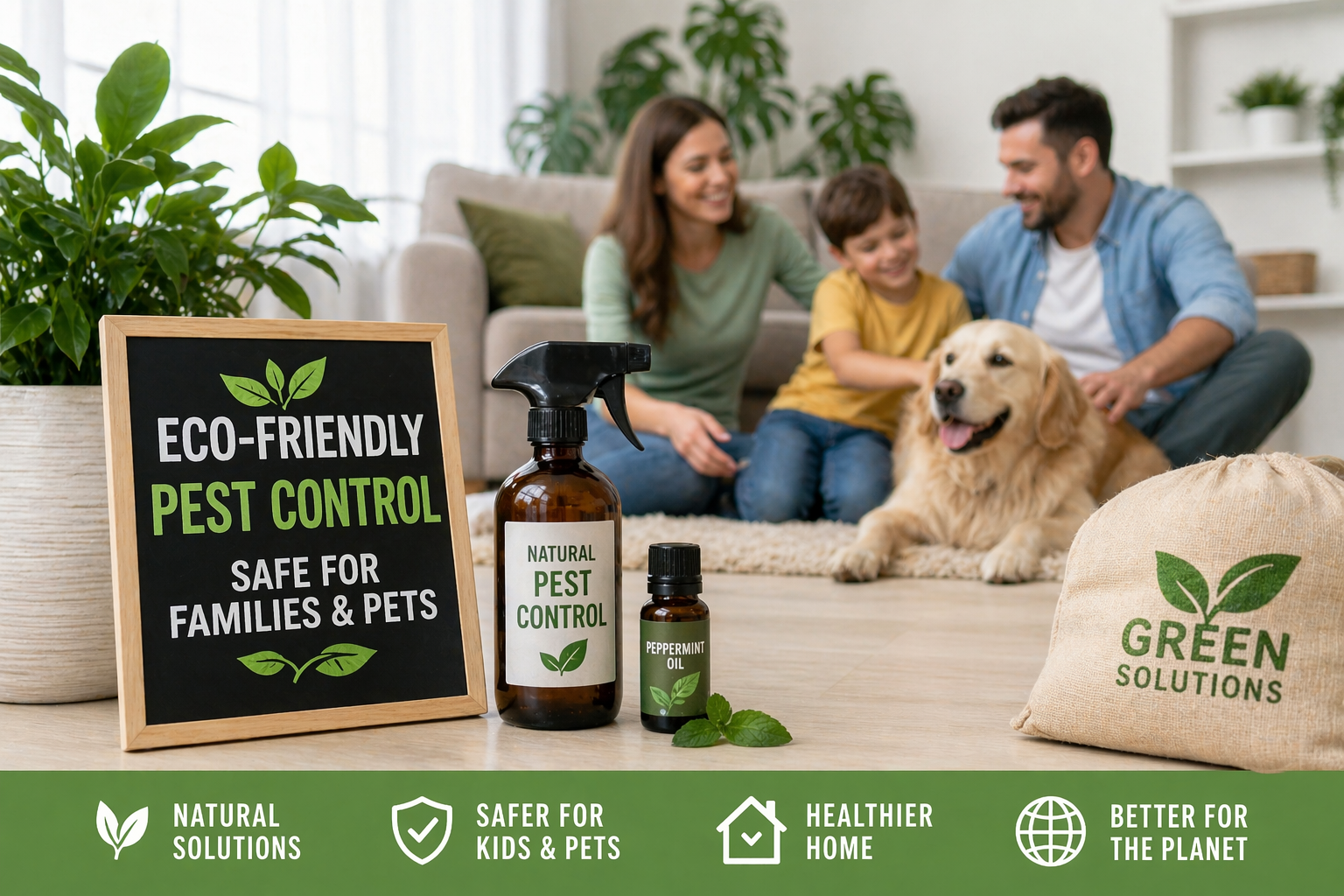
Eco-Friendly Pest Control Options for Families and Pets
Keeping your home free of pests is essential for comfort, health, and peace of min, but many traditional pest control methods rely on harsh chemicals that can raise concerns for families and pet owners. If you’re looking for safer, more sustainable ways to manage pests, eco-friendly pest control offers effective solutions without compromising the well-being of your household.
In this guide, we’ll explore what eco-friendly pest control really means, why it matters, and the best options available to protect your home while keeping your family and pets safe.
What Is Eco-Friendly Pest Control?
Eco-friendly pest control, sometimes called “green pest control”focuses on using methods and products that minimize environmental impact while still effectively managing pests. These approaches prioritize:
- Low-toxicity or non-toxic treatments
- Reduced chemical usage
- Targeted pest elimination
- Prevention strategies over reactive treatments
- Safety for children, pets, and beneficial insects
Rather than relying solely on broad-spectrum pesticides, eco-friendly pest control takes a more balanced and strategic approach.
Why Eco-Friendly Pest Control Matters
Many conventional pesticides can linger in the environment, potentially affecting indoor air quality, water sources, and non-target species like pollinators.
For families with children and pets, this is especially important. Kids and animals are more likely to come into contact with treated surfaces, increasing their exposure risk.
Eco-friendly solutions help:
- Reduce chemical exposure inside the home
- Protect pets from accidental ingestion or contact
- Maintain healthier indoor air quality
- Support local ecosystems by minimizing harm to beneficial insects
The goal is simple: eliminate pests without introducing unnecessary risks.
Common Household Pests and Safe Solutions
Different pests require different strategies. Let’s take a look at some of the most common household pests and eco-friendly ways to control them.
Ants
Ants are one of the most common household pests, often entering homes in search of food.
Eco-friendly solutions include:
- Sealing cracks and entry points
- Cleaning up food spills promptly
- Using natural deterrents like vinegar or citrus oils
- Applying bait systems that target the colony instead of spraying chemicals
Targeted baiting is especially effective because it eliminates the source of the infestation rather than just the visible ants.
Spiders
While most spiders are harmless, many homeowners prefer to keep them out of living spaces.
Safe control methods:
- Reducing clutter where spiders can hide
- Vacuuming webs and egg sacs
- Using essential oils like peppermint or eucalyptus as natural repellents
- Installing proper door sweeps and window screens
Because spiders often follow their prey, controlling other insects will naturally reduce spider activity.
Rodents (Mice and Rats)
Rodents can carry diseases and cause damage, making control essential.
Eco-friendly options:
- Sealing gaps and holes around the home
- Using humane traps
- Eliminating food and water sources
- Maintaining clean storage areas
Avoiding toxic rodenticides is important, as they can pose serious risks to pets and wildlife.
Cockroaches
Cockroaches thrive in warm, moist environments and can spread bacteria.
Green control methods:
- Fixing leaks and reducing moisture
- Keeping kitchens and bathrooms clean
- Using gel baits instead of sprays
- Applying boric acid in targeted areas (with professional guidance)
Baits are particularly effective because they are contained and limit exposure.
Fleas and Ticks
Fleas and ticks are a major concern for pet owners.
Pet-safe solutions include:
- Regular grooming and bathing
- Washing pet bedding frequently
- Vacuuming carpets and upholstery
- Using veterinarian-approved treatments
Outdoor yard treatments can also be done using eco-conscious products that reduce flea and tick populations without harming beneficial insects.
Integrated Pest Management (IPM): The Gold Standard
One of the most effective eco-friendly pest control strategies is Integrated Pest Management (IPM).
IPM is a comprehensive approach that combines multiple techniques to manage pests in the most environmentally responsible way possible.
Key Principles of IPM:
- Inspection and MonitoringIdentify the type of pest and assess the level of infestation.
- PreventionEliminate conditions that attract pests, such as food, water, and shelter.
- ControlUse targeted treatments only when necessary, starting with the least toxic options.
- EvaluationMonitor results and adjust strategies as needed.
IPM focuses on long-term prevention rather than short-term fixes, making it ideal for families seeking sustainable solutions.
Natural and Low-Toxicity Treatment Options
Eco-friendly pest control doesn’t mean doing nothing—it means choosing smarter, safer tools.
Botanical-Based Products
Many modern pest control solutions use plant-derived ingredients, such as:
- Essential oils (peppermint, clove, rosemary)
- Neem oil
- Pyrethrins (derived from chrysanthemum flowers)
These products break down more quickly in the environment and are generally safer when used correctly.
Diatomaceous Earth
This natural powder is made from fossilized algae and works by damaging the outer layer of insects, leading to dehydration.
It’s effective against:
- Ants
- Cockroaches
- Fleas
Food-grade diatomaceous earth is considered safe for use around pets when applied properly.
Baiting Systems
Baits are a cornerstone of eco-friendly pest control because they:
- Target specific pests
- Use minimal active ingredients
- Reduce widespread chemical exposure
They are especially effective for ants, cockroaches, and termites.
Heat and Physical Controls
Non-chemical solutions can be highly effective in certain situations.
Examples include:
- Heat treatments for bed bugs
- Traps for rodents and insects
- Barriers and exclusion techniques
These methods eliminate pests without introducing chemicals into your home.
Making Your Home Less Attractive to Pests
Prevention is one of the most important aspects of eco-friendly pest control.
Keep a Clean Environment
- Store food in airtight containers
- Take out trash regularly
- Clean up crumbs and spills
Address Moisture Issues
- Fix leaks promptly
- Use dehumidifiers in damp areas
- Ensure proper drainage around your home
Maintain Your Yard
- Trim bushes and trees away from the house
- Remove standing water
- Keep gutters clean
Seal Entry Points
- Caulk cracks and gaps
- Install door sweeps
- Repair damaged screens
These simple steps can significantly reduce the likelihood of infestations.
Are Eco-Friendly Pest Control Methods Effective?
A common misconception is that eco-friendly pest control is less effective than traditional methods. In reality, when applied correctly, especially as part of an IPM strategy, these methods can be just as effective.
The key difference is that eco-friendly pest control focuses on:
- Long-term prevention
- Targeted treatments
- Reducing reliance on chemicals
Instead of a quick spray-and-go approach, it addresses the root cause of the problem.
When to Call a Professional
While DIY methods can help with minor issues, larger infestations often require professional expertise.
A professional pest control company experienced in eco-friendly methods can:
- Properly identify pests
- Develop a customized treatment plan
- Use products that are safe for families and pets
- Provide ongoing monitoring and prevention
Professionals also have access to advanced tools and treatments that are not available to the general public.
Choosing the Right Pest Control Company
Not all pest control companies are the same, so it’s important to choose one that aligns with your values.
Look for a company that:
- Offers eco-friendly or “green” treatment options
- Uses Integrated Pest Management practices
- Clearly explains products and methods used
- Prioritizes safety for children and pets
Transparency and education are key indicators of a trustworthy provider.
Protect Your Home the Safe Way
Eco-friendly pest control offers a smarter, safer way to protect your home from unwanted pests. By focusing on prevention, targeted treatments, and low-toxicity solutions, you can maintain a pest-free environment without putting your family or pets at risk.
Whether you’re dealing with ants in the kitchen, rodents in the attic, or fleas affecting your pets, there are effective green solutions available.
At DHS Pest Control, we understand the importance of protecting what matters most. Our eco-friendly pest control services are designed to deliver results while keeping your home safe for your family and pets.
If you’re ready for a safer, more sustainable approach to pest control, contact DHS Pest Control today to schedule an inspection.