
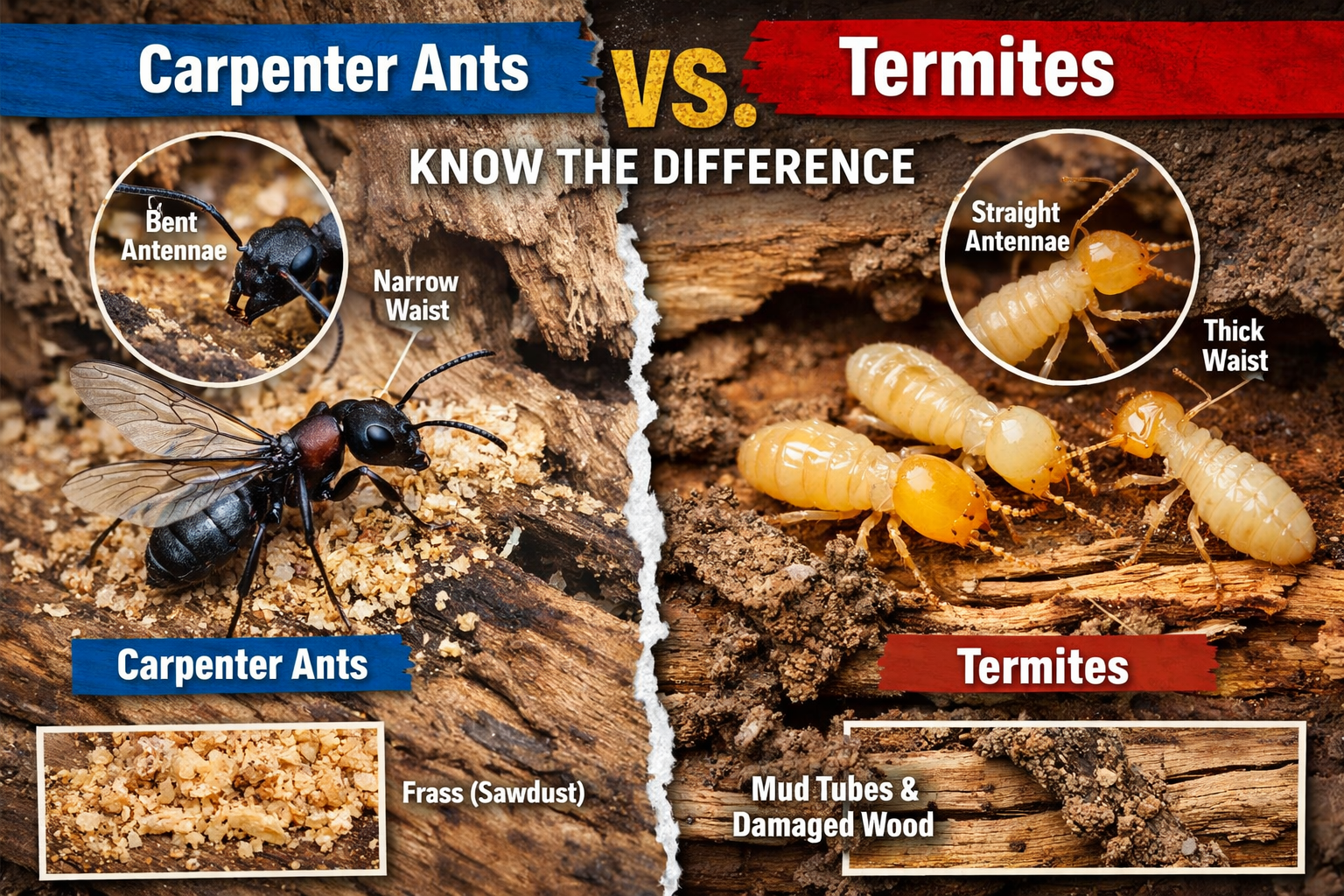
Carpenter Ants vs. Termites: Know the Difference
If you discover insects around your home that appear to be damaging wood, your first thought may be termites. However, another common pest is often mistaken for them are carpenter ants. While both pests can cause structural damage, they behave very differently and require different treatment approaches. Understanding the difference between carpenter ants and termites can help homeowners respond quickly and prevent serious damage.
In this guide, we’ll break down the key differences between carpenter ants and termites, including how to identify them, signs of infestation, the damage they cause, and when to call a professional pest control company.
Why Homeowners Confuse Carpenter Ants and Termites
At first glance, carpenter ants and termites can look similar, especially when they swarm. During certain times of the year, both pests produce winged reproductive members that leave their colonies to establish new ones. These “swarmers” are often the first sign homeowners notice.
Because both insects may appear around windows, doors, or lights during swarming season, many people assume they are seeing termites when they may actually be carpenter ants.
However, there are several important physical and behavioral differences that make identifying them easier.
Physical Differences Between Carpenter Ants and Termites
One of the easiest ways to tell these pests apart is by looking closely at their body shape.
Carpenter Ants
Carpenter ants are one of the largest ant species found in homes.
Key characteristics include:
- Narrow, pinched waist
- Elbowed (bent) antennae
- Front wings longer than back wings
- Black, reddish, or dark brown color
- Workers range from ¼ to ½ inch long
Carpenter ants have clearly defined body segments and a noticeable waist, which is typical of most ants.
Termites
Termites look quite different once you know what to look for.
Key characteristics include:
- Straight antennae
- Thick, uniform waist
- Four wings of equal length
- Cream, tan, or light brown color
- Usually smaller than carpenter ants
Termites have a more uniform, “tube-shaped” body without the pinched waist seen in ants.
If you notice flying insects indoors, examining these features closely can help determine which pest you are dealing with.
The Biggest Difference: How They Treat Wood
Although both pests can damage wood structures, they do so for completely different reasons.
Carpenter Ants Do Not Eat Wood
Carpenter ants excavate wood to build their nests. They chew through wood to create tunnels and chambers where the colony lives, but they do not consume the wood itself.
Instead, they push wood debris out of their galleries. This debris often appears as small piles of sawdust-like material called frass.
Carpenter ants typically prefer wood that is:
- Damp
- Decaying
- Previously damaged by moisture
However, as colonies expand, they may also tunnel through dry, healthy wood.
Termites Eat Wood
Termites, on the other hand, actually consume wood as a food source. They feed on cellulose, the organic fiber found in wood and many plant materials.
As termites eat wood from the inside out, they can cause extensive structural damage before homeowners even realize they are present.
This is one reason termite infestations can be so costly if not detected early.
Signs of a Carpenter Ant Infestation
Carpenter ants are common throughout many parts of the United States and are frequently found in homes with moisture problems.
Signs you may have carpenter ants include:
1. Piles of Sawdust (Frass)
Because carpenter ants push wood shavings out of their tunnels, you may notice small piles of sawdust beneath baseboards, window frames, or wooden structures.
This debris may also contain insect parts.
2. Large Ants Indoors
Seeing large black or reddish ants inside your home—especially at night—can indicate a carpenter ant colony nearby.
These ants are most active after dark and may travel long distances in search of food.
3. Rustling Sounds in Walls
In quiet environments, you may hear faint rustling sounds coming from inside walls where carpenter ants are tunneling.
4. Winged Ants During Spring
In spring or early summer, mature colonies release winged reproductive ants. If you see winged ants indoors, it could mean a colony is nesting inside the structure.
Signs of a Termite Infestation
Termites often remain hidden for long periods, but there are several warning signs homeowners should watch for.
1. Mud Tubes
Subterranean termites build mud tubes along foundations, walls, and other surfaces. These pencil-sized tunnels protect termites from dry air and predators while they travel between the soil and their food source.
2. Hollow-Sounding Wood
Wood damaged by termites may sound hollow when tapped because the insects consume the inside while leaving the outer surface intact.
3. Discarded Wings
After termites swarm, they shed their wings. Finding piles of wings near windows, doors, or light fixtures may indicate an infestation.
4. Blistering or Damaged Wood
Termite feeding can cause wood to appear blistered or bubbled, sometimes resembling water damage.
Damage Caused by Carpenter Ants vs. Termites
Both pests can cause serious problems if left untreated.
Carpenter Ant Damage
Carpenter ants expand their nests over time, creating extensive tunnel systems inside wood structures. Damage often occurs in:
- Wall studs
- Window frames
- Door frames
- Decks
- Roof structures
While carpenter ants typically cause damage more slowly than termites, large colonies can still weaken structural wood over time.
Termite Damage
Termites can cause far more extensive damage because they consume wood continuously. A large termite colony may eat through structural components such as:
- Support beams
- Floor joists
- Wall studs
- Subflooring
In severe cases, termite infestations can compromise the structural integrity of a building.
When Are These Pests Most Active?
Both carpenter ants and termites are active year-round, but their swarming seasons often alert homeowners to their presence.
- Carpenter ants typically swarm in spring and early summer.
- Subterranean termites often swarm in spring after warm rains.
Because these events occur around the same time, homeowners often confuse one pest for the other.
Why Professional Identification Matters
Misidentifying carpenter ants as termites—or vice versa—can lead to ineffective treatment.
The control methods for each pest are very different:
- Carpenter ant control often involves locating and eliminating nests, addressing moisture issues, and applying targeted treatments.
- Termite control typically requires specialized soil treatments, baiting systems, or other professional solutions designed to eliminate the entire colony.
Attempting DIY treatments without identifying the pest correctly may allow the infestation to continue growing.
Preventing Carpenter Ants and Termites
While professional pest control is the best solution for active infestations, homeowners can take several steps to reduce the risk of both pests.
Reduce Moisture
Moisture attracts carpenter ants and creates conditions favorable for termites.
- Fix leaking pipes
- Repair roof leaks
- Ensure proper ventilation in crawl spaces and attics
Store Firewood Away From the House
Stacks of firewood placed against the home can attract wood-destroying pests. Store firewood at least 20 feet away from the structure whenever possible.
Seal Entry Points
Seal cracks in foundations, gaps around doors and windows, and openings around utility lines.
Remove Wood-to-Soil Contact
Deck posts, siding, and structural wood should not directly contact soil whenever possible.
When to Call a Professional Pest Control Company
If you suspect carpenter ants or termites in your home, early intervention is critical.
A professional inspection can:
- Identify the pest species
- Locate nesting sites or termite activity
- Determine the extent of damage
- Recommend the most effective treatment plan
Because both pests can remain hidden inside walls and structural wood, professional expertise is often necessary to fully eliminate the problem.
Protect Your Home From Wood-Destroying Pests
Carpenter ants and termites may look similar at first glance, but the differences between them are significant. Carpenter ants tunnel through wood to build nests, while termites consume wood as a food source. Both pests can cause structural damage if left untreated, making early detection and proper identification essential.
If you’re seeing large ants indoors, piles of sawdust, mud tubes, or flying insects around your home, it may be time to schedule a professional pest inspection.
At DHS Pest Control, our experienced technicians can identify the source of the problem and provide targeted treatments designed to protect your home and property.
Contact DHS Pest Control today to schedule an inspection and keep your home safe from carpenter ants, termites, and other destructive pests.